Buy berchtesgadener-land.eu ?
We are moving the project
berchtesgadener-land.eu .
Are you interested in purchasing the domain
berchtesgadener-land.eu ?
domain@kv-gmbh.de · 0541-91531010
Buy berchtesgadener-land.eu ?
Why do meteorites and asteroids always land in craters?
Meteorites and asteroids often land in craters because craters are evidence of past impacts. When a meteorite or asteroid collides with a planet or moon, it creates a crater upon impact. Therefore, it is more likely for subsequent meteorites and asteroids to land in these pre-existing craters, as they are attracted to areas with a history of impact events. Additionally, the presence of a crater may also make it easier for meteorites and asteroids to penetrate the surface and become embedded in the ground. **
How close can asteroids come to Earth?
Asteroids can come as close as a few thousand kilometers to Earth, which is considered a close approach in astronomical terms. Some asteroids have even passed between the Earth and the Moon, known as a near-Earth object. While most asteroids pass by Earth at a safe distance, there is always a possibility of a potential impact, which is closely monitored by astronomers. **

Similar search terms for Asteroids
Top-Angebote
Products related to Asteroids:
-
Urban Nature Culture Vase Talvi - WhiteFloating the sea waves, a sense of calm takes over, feeling at home in the world. That same feeling we get at home, like a safe haven to relax our senses and feast our eyes on our most cherished things.267,80 $*Shipping: 0,00 $Secure redirect to the provider




-
Are there any gaseous asteroids at all?
While most asteroids are solid rocky or metallic bodies, there is a type of asteroid known as a comet-like asteroid that can have a gaseous component. These asteroids, also known as active asteroids, have been observed to have a thin atmosphere or outgassing of gases due to the heating of volatile materials on their surface by the Sun. However, these gaseous components are typically very thin compared to the atmospheres of planets or moons. **
-
What happens to asteroids, meteorites, and the Earth?
Asteroids are rocky objects that orbit the Sun, mostly found in the asteroid belt between Mars and Jupiter. When asteroids enter Earth's atmosphere, they are called meteoroids. If a meteoroid survives the journey through the atmosphere and lands on Earth's surface, it is called a meteorite. Meteorites can provide valuable information about the early solar system and are studied by scientists to learn more about the formation and evolution of our planet. **
-
What is the difference between asteroids and meteoroids?
Asteroids are larger rocky bodies that orbit the sun, typically found in the asteroid belt between Mars and Jupiter. They can range in size from a few meters to hundreds of kilometers in diameter. Meteoroids, on the other hand, are smaller rocky or metallic fragments that are also in orbit around the sun, but are much smaller than asteroids, typically ranging from the size of a grain of sand to a few meters. When a meteoroid enters the Earth's atmosphere and burns up, it is called a meteor. If any part of the meteoroid survives and lands on Earth, it is then called a meteorite. **
-
What is in Space Engineers: Planets and Asteroids?
In Space Engineers: Planets and Asteroids, players can explore and colonize procedurally generated planets and moons. They can gather resources, build bases, and create vehicles to navigate the planetary terrain. The expansion also introduces new environmental hazards such as gravity, atmosphere, and weather, adding a new layer of challenge to the gameplay. Additionally, players can encounter and mine asteroids in space, adding another dimension to the game's resource gathering mechanics. **


How many asteroids are there in our solar system?
There are millions of asteroids in our solar system, with estimates ranging from over 1.5 million to several million. Most of these asteroids are located in the asteroid belt between Mars and Jupiter, but there are also many others scattered throughout the solar system. Scientists continue to discover new asteroids regularly, so the exact number is constantly changing. **
How are asteroids classified in terms of their danger?
Asteroids are classified in terms of their danger based on their size, speed, and trajectory. The Torino Scale and the Palermo Technical Impact Hazard Scale are two systems used to assess the potential danger of an asteroid impact. The Torino Scale categorizes asteroids based on their potential to cause damage, ranging from 0 (no hazard) to 10 (certain collision with global consequences). The Palermo Scale calculates the impact probability and energy of an asteroid, with a higher value indicating a higher potential danger. These classification systems help scientists and policymakers assess the potential threat posed by asteroids and take appropriate measures to mitigate the risk. **
Top-Angebote
Products related to Asteroids:
-
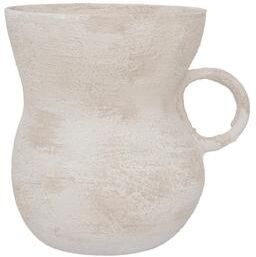
Urban Nature Culture Vase RelaxedQuiet elegancy comes to life in Urban Nature Culture's vase Relaxed. Handmade in Portugal, this ceramic vase has a shape beyond anything you've seen - it's organic, it flows and steals your heart with its playful ear.123,40 $*Shipping: 0,00 $Secure redirect to the provider
-
Why do meteorites and asteroids always land in craters?
Meteorites and asteroids often land in craters because craters are evidence of past impacts. When a meteorite or asteroid collides with a planet or moon, it creates a crater upon impact. Therefore, it is more likely for subsequent meteorites and asteroids to land in these pre-existing craters, as they are attracted to areas with a history of impact events. Additionally, the presence of a crater may also make it easier for meteorites and asteroids to penetrate the surface and become embedded in the ground. **
-
How close can asteroids come to Earth?
Asteroids can come as close as a few thousand kilometers to Earth, which is considered a close approach in astronomical terms. Some asteroids have even passed between the Earth and the Moon, known as a near-Earth object. While most asteroids pass by Earth at a safe distance, there is always a possibility of a potential impact, which is closely monitored by astronomers. **
-
Are there any gaseous asteroids at all?
While most asteroids are solid rocky or metallic bodies, there is a type of asteroid known as a comet-like asteroid that can have a gaseous component. These asteroids, also known as active asteroids, have been observed to have a thin atmosphere or outgassing of gases due to the heating of volatile materials on their surface by the Sun. However, these gaseous components are typically very thin compared to the atmospheres of planets or moons. **
-
What happens to asteroids, meteorites, and the Earth?
Asteroids are rocky objects that orbit the Sun, mostly found in the asteroid belt between Mars and Jupiter. When asteroids enter Earth's atmosphere, they are called meteoroids. If a meteoroid survives the journey through the atmosphere and lands on Earth's surface, it is called a meteorite. Meteorites can provide valuable information about the early solar system and are studied by scientists to learn more about the formation and evolution of our planet. **
Similar search terms for Asteroids
-
Urban Nature Culture Vase Talvi - WhiteFloating the sea waves, a sense of calm takes over, feeling at home in the world. That same feeling we get at home, like a safe haven to relax our senses and feast our eyes on our most cherished things.267,80 $*Shipping: 0,00 $Secure redirect to the provider
-
Urban Nature Culture Vase Ace - AceSetting forth a tradition that is centuries old, pottery has ever been one of Portugal's trades. Urban Nature Culture loves to work with Portuguese artisans - who use their skills to combine modern looks and contemporary design with techniques of old.145,60 $*Shipping: 0,00 $Secure redirect to the provider
-
Nature Kare Wellness Jwmax 300 mlNutrition and Supplements Special supplements Nature Kare Wellness Jwmax 300 ml This liquid composition, highly concentrated, contributes to the rehabilitation of damaged cartilage, to the proper functioning of the joints, and to the reduction of pain and inflammation. Precautions: They have not been described. Composition: Water, 20% Glucosamine Sulfate, 12% Chondroitin Sulfate, 5% Methyl Sulfonyl Methane (MSM), Collagen, 2% black currant concentrate juice, forest fruit aroma, 0.5% fish collagen, inulin 0.5%, 0.5% hyaluronic acid, vitamin C (ascorbic acid) 0.12%, preservative (potassium sorbate), sweeteners: sucralose and steviol glycosides from Stevia rebaudiana extract, beta carotene dye, Vitamin D (cholecalciferol) ). How to use: Take 10 ml 1 time a day, preferably before breakfast.34,20 £*Shipping: 3,99 £Secure redirect to the provider
-
What is the difference between asteroids and meteoroids?
Asteroids are larger rocky bodies that orbit the sun, typically found in the asteroid belt between Mars and Jupiter. They can range in size from a few meters to hundreds of kilometers in diameter. Meteoroids, on the other hand, are smaller rocky or metallic fragments that are also in orbit around the sun, but are much smaller than asteroids, typically ranging from the size of a grain of sand to a few meters. When a meteoroid enters the Earth's atmosphere and burns up, it is called a meteor. If any part of the meteoroid survives and lands on Earth, it is then called a meteorite. **
-
What is in Space Engineers: Planets and Asteroids?
In Space Engineers: Planets and Asteroids, players can explore and colonize procedurally generated planets and moons. They can gather resources, build bases, and create vehicles to navigate the planetary terrain. The expansion also introduces new environmental hazards such as gravity, atmosphere, and weather, adding a new layer of challenge to the gameplay. Additionally, players can encounter and mine asteroids in space, adding another dimension to the game's resource gathering mechanics. **
-
How many asteroids are there in our solar system?
There are millions of asteroids in our solar system, with estimates ranging from over 1.5 million to several million. Most of these asteroids are located in the asteroid belt between Mars and Jupiter, but there are also many others scattered throughout the solar system. Scientists continue to discover new asteroids regularly, so the exact number is constantly changing. **
-
How are asteroids classified in terms of their danger?
Asteroids are classified in terms of their danger based on their size, speed, and trajectory. The Torino Scale and the Palermo Technical Impact Hazard Scale are two systems used to assess the potential danger of an asteroid impact. The Torino Scale categorizes asteroids based on their potential to cause damage, ranging from 0 (no hazard) to 10 (certain collision with global consequences). The Palermo Scale calculates the impact probability and energy of an asteroid, with a higher value indicating a higher potential danger. These classification systems help scientists and policymakers assess the potential threat posed by asteroids and take appropriate measures to mitigate the risk. **
* All prices are inclusive of VAT and, if applicable, plus shipping costs. The offer information is based on the details provided by the respective shop and is updated through automated processes. Real-time updates do not occur, so deviations can occur in individual cases. ** Note: Parts of this content were created by AI.